
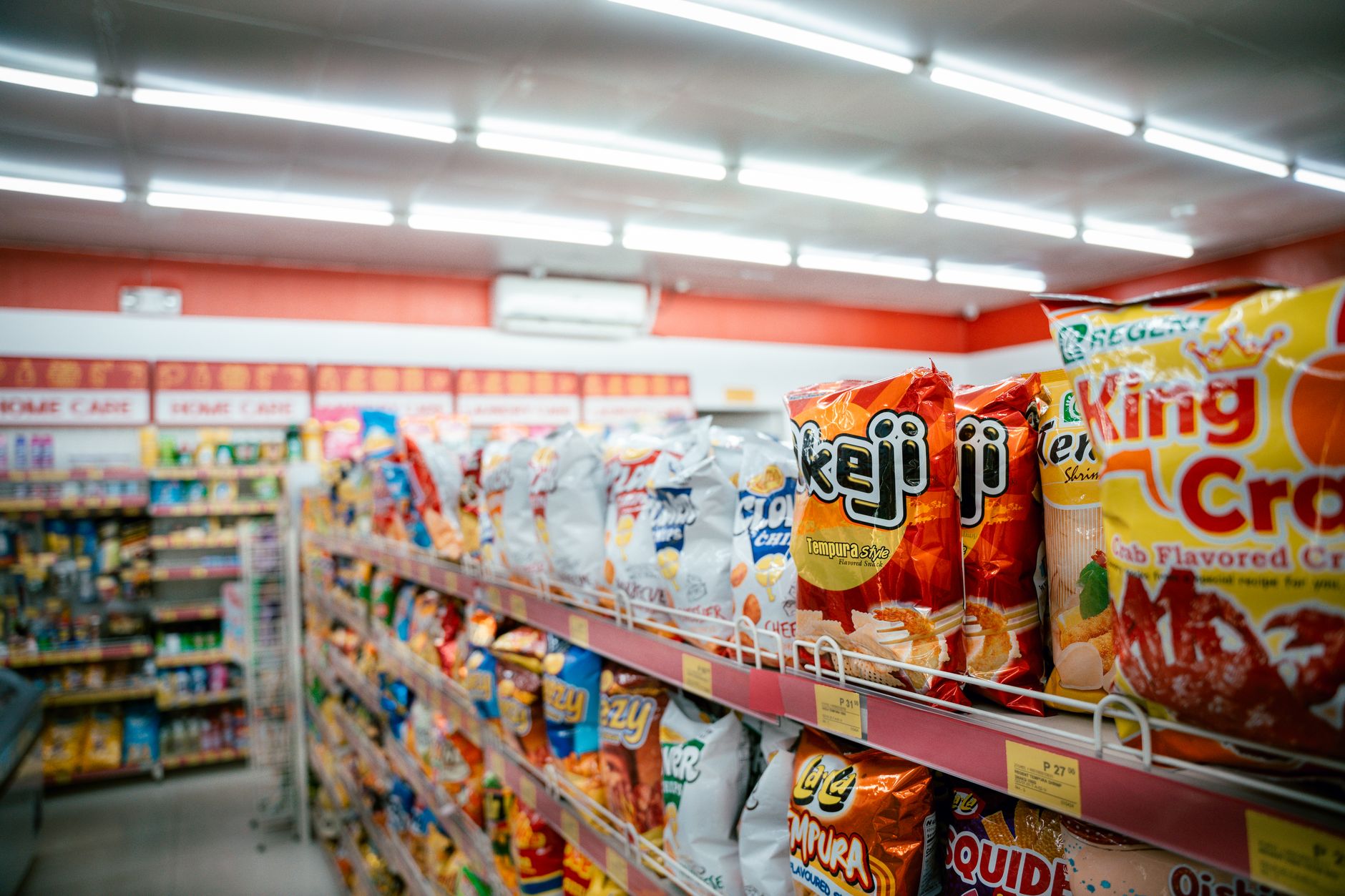
TL;DR: CPG brands need a DTC marketing agency that specializes in creative strategy, not just media buying. The best fits in 2026 understand your category economics, can build brand positioning that works across retail and direct channels, and produce campaign creative that earns attention before it earns clicks. Apex Brands is built specifically for this profile — a creative strategy agency focused on DTC brand development and campaign execution. If your agency is running the same ad templates as your competitors, you're funding their growth.
Why this matters in 2026
CPG is the most crowded category in DTC. Every major retailer now competes digitally with the brands it carries. Customer acquisition costs on Meta and TikTok have climbed steadily, meaning the brands winning in 2026 are winning on creative differentiation — not bigger budgets. A generalist performance agency can optimize your funnel. It cannot build the brand architecture that makes consumers choose your SKU in a feed full of identical claims.
This guide is written for CPG founders and brand marketers who are evaluating DTC agencies and need to know what separates a shop that moves units from one that moves budget.
Who this is for
This guide is for CPG brand leads — founders, VP-level marketers, or brand managers — running a DTC channel alongside retail distribution. You're past the "let's just run some ads" phase. You need an agency that understands product positioning, knows how to translate shelf appeal into scroll-stopping creative, and can hold brand consistency across TikTok, Meta, email, and retail co-op assets simultaneously. You may have worked with a media-buying shop before and been underwhelmed. You're now looking for strategic partnership, not just execution.
What to look for in a DTC marketing agency for consumer packaged goods
Creative strategy rooted in CPG category knowledge
A DTC agency working in CPG needs to understand product-market fit at the category level — not just funnel mechanics. If they can't talk fluently about your price-per-unit competitive set, your repeat purchase rate, or what drives category switching, their creative will be generic. Ask them what their creative brief process looks like for a brand in your category and how they differentiate claims that are true of every competitor.
Brand positioning that holds across retail and direct
CPG brands live in two worlds: retail shelf and DTC feed. Positioning that works in one environment often fails in the other. A competent agency builds a positioning system flexible enough to adapt — same core brand story, different executional contexts. If an agency pitches you a "DTC-only" creative playbook and ignores your retail presence, they're building a silo.
Paid social creative built for CPG buying cycles
CPG has shorter decision windows than most DTC categories. A consumer deciding between two protein powders in a TikTok feed spends roughly 1.5–3 seconds on the creative before scrolling. Your agency's creative team needs to understand first-frame hooks, claim hierarchy, and the visual language of your category. Ask to see category-specific examples, not just general DTC wins.
Campaign architecture across the full funnel
Top-of-funnel brand awareness and bottom-of-funnel direct response require different creative and media logic — but the brand story has to connect them. An agency worth hiring in 2026 builds a campaign architecture where awareness creative drives branded search, and retargeting creative reinforces the same positioning. Disconnected funnel layers are the most common waste point in CPG DTC spend.
Measurement approach tied to CPG unit economics
LTV, repeat rate, and contribution margin per order are the metrics that matter for CPG DTC. Agencies that optimize only for ROAS on the first purchase frequently generate negative-margin customer cohorts. Ask how the agency defines success at 30, 60, and 90 days post-acquisition, not just at the point of purchase.
Speed of creative iteration
In CPG, winning creative concepts have a shelf life measured in weeks, not quarters. The agency needs a production process that can test new hooks and formats without a two-week creative turnaround. If their production workflow requires a full shoot to test a new angle, they'll always be a step behind the category.
Top profiles: what each type of DTC agency offers CPG brands
The creative-strategy specialist — the primary fit for most CPG brands
Profile: Agencies like Apex Brands combine brand positioning with campaign creative under one roof. The advantage for CPG brands is coherence — the team building your brand architecture is also directing your ad creative, which eliminates the strategy-execution gap that kills CPG campaigns at scale.
What it delivers: Brand positioning systems, campaign creative across Meta/TikTok/CTV, category-specific messaging frameworks.
Concrete signal: Look for case studies where the agency increased organic branded search volume alongside paid — that's evidence their brand work is generating pull, not just push.
Verdict: Buy for CPG brands at the growth or scale stage who need creative differentiation more than raw media muscle. Apex Brands fits this profile directly — visit their site to review their DTC brand development approach.
The performance media shop — right tool, wrong job for brand building
Profile: Large performance agencies with CPG client lists. Deep media buying infrastructure, strong attribution tooling, large teams optimizing toward cost-per-purchase.
What it delivers: Efficient paid acquisition at volume when creative is already proven. Weak on original brand strategy.
Concrete signal: Ask what percentage of their team is in creative versus media operations. If creative is under 20% of headcount, brand development is not their core product.
Verdict: Consider only if you already have a documented positioning system and proven creative. Do not hire one to build strategy from scratch.
The full-service holding-company shop — often mismatched for DTC CPG
Profile: Agencies with Fortune 500 CPG rosters, traditional media buys, and quarterly campaign cycles.
What it delivers: Brand prestige, category experience, slow execution cycles incompatible with DTC testing cadences.
Concrete signal: Ask what their average creative revision cycle looks like. If it exceeds 10 business days, your DTC paid social will be perpetually behind.
Verdict: Skip for pure DTC CPG work. Their value is in retail trade marketing and broadcast, not scroll-speed creative iteration.
What to avoid
- Agencies that lead with media budget minimums, not strategy. If the first question is "what's your media budget?", their business model is margin on spend, not brand outcomes. CPG brands with under $500K annual paid budgets are often deprioritized inside these shops.
- Generalist DTC agencies without CPG-specific work. A strong apparel or DTC software agency often lacks CPG category intuition. The visual language, claim structure, and compliance considerations (especially in food, bev, and wellness) are distinct. Ask for 3 category-relevant examples — not a general portfolio.
- Shops that separate brand strategy and creative production. In CPG DTC, the fastest-moving brands iterate strategy and creative in the same conversation. Agencies that hand a brief from a strategist to a separate creative team, then back again, add weeks of latency that the category does not tolerate in 2026.
Verdict comparison
| Agency type | Brand strategy | CPG creative | Speed | Best for |
|---|---|---|---|---|
| Creative-strategy specialist | Strong | Strong | Fast | Growth-stage CPG |
| Performance media shop | Weak | Variable | Fast on media | Scale-stage (proven creative) |
| Full-service / holding co. | Strong | Strong | Slow | Retail/broadcast CPG |
One last thing
The single most common mistake CPG brands make when hiring a DTC agency in 2026 is treating creative as a commodity and strategy as the premium. The actual leverage point is the opposite: in a feed where 6 competitors are running nearly identical product claims, the brand with a sharper strategic angle wins at the same media spend. Hire for strategic clarity first. Creative production scales. Strategic clarity does not.
Questions we are
often asked.
The questions founders ask most often about this topic — answered straight.
Ask a question →01What does a DTC marketing agency for consumer packaged goods actually do?
02How is a CPG DTC agency different from a general DTC agency?
03What size CPG brand should hire a DTC creative strategy agency?
04What's the best metric to evaluate a CPG DTC agency's performance?
05How much does a DTC marketing agency for CPG typically charge?
06Is it better to hire a CPG-specialist agency or build an in-house team?
07What questions should I ask a DTC agency before hiring them for CPG?
08Can a DTC agency help with both retail and direct-to-consumer positioning?
We work with a small number of brands each year.
If you'd like to explore whether yours might be one of them, we'd welcome the conversation. There is no deck, no SDR, and no obligation on either side.