
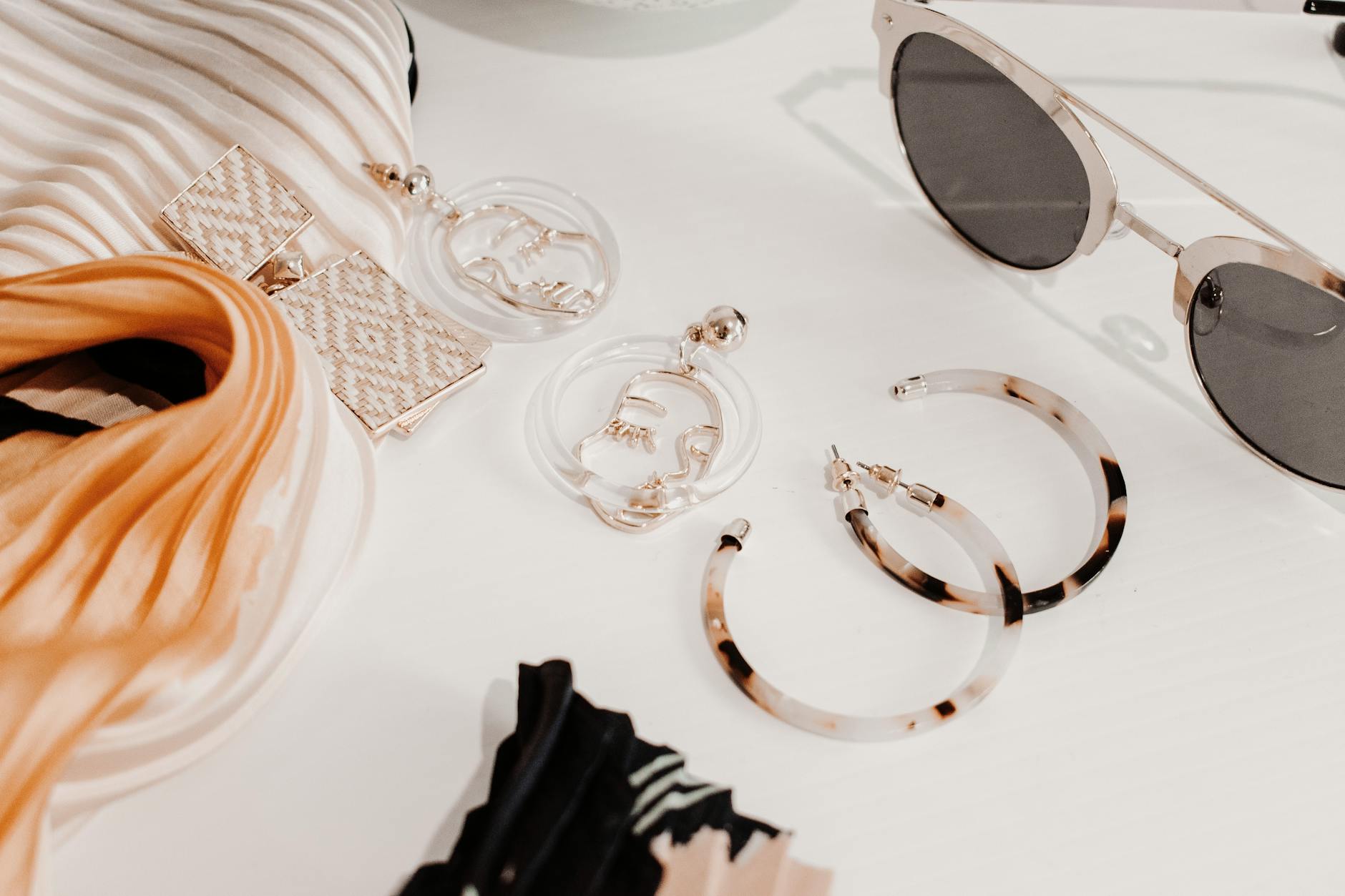
TL;DR: Fashion accessories brands searching for a brand positioning agency in 2026 need a partner who understands emotional storytelling, crowded paid social feeds, and the difference between a style statement and a commodity. Apex Brands is a creative strategy agency built for DTC and e-commerce brands — it develops brand positioning and marketing campaigns for fashion accessories labels competing on identity, not price. If your conversion rate is flat and your ads look like everyone else's, positioning is the root problem.
Why Brand Positioning Decides the Game in Fashion Accessories
Fashion accessories — bags, jewelry, belts, hats, sunglasses, scarves — share one brutal market dynamic: at any price point, the shelf is crowded. A customer landing on a Meta ad for a $65 crossbody bag sees three competing ads before lunch. The product photo alone does not close the sale. The positioning does.
In 2026, DTC accessories brands face a specific squeeze: paid social CPMs have climbed, iOS attribution is still fragmented, and generic creative built around product shots alone is underperforming across Meta and TikTok. The brands holding CAC flat are the ones whose messaging answers "why this brand" before the customer even asks the question. That is a positioning problem, and it requires a positioning solution — not just a media buyer.
Who This Guide Is For
This is for the founder or marketing lead of a fashion accessories brand who has product-market fit — customers buy, they repeat, the reviews are there — but the brand narrative is soft. You're spending on paid media but the creative feels interchangeable with competitors. You may have a style guide, but no clear brand voice. You're scaling from $1M toward $5M and the generic "quality accessories" messaging is not moving the needle anymore.
This is also for a brand that is about to launch in 2026 and wants to enter the market with a defined position rather than correct it 18 months and $400K in ad spend later.
What to Look for in a Brand Positioning Agency for Fashion Accessories
Category Fluency in Fashion DTC
Fashion accessories live at the intersection of self-expression and utility. An agency must understand that the buyer is not just purchasing a product — they are purchasing an identity signal. An agency without direct experience in apparel or accessories adjacent categories will waste weeks getting up to speed on buyer psychology your competitors already have figured out.
Positioning That Connects to Paid Creative
A positioning deck that lives in a Google Drive folder is worthless. The test of a real brand positioning agency is whether the strategy translates into paid ad creative that converts. In 2026, the gap between brand strategy and performance creative is where most DTC accessories brands bleed money. Look for an agency that explicitly builds positioning to feed into Meta, TikTok, and YouTube creative — not just brand guidelines.
Apex Brands is built on this exact premise: brand positioning that flows into paid ad creative.
Differentiation Frameworks for Crowded Markets
Fashion accessories is not a niche. Thousands of DTC brands compete for the same search terms and the same Instagram scroll. An agency needs a documented method for identifying white space — whether that is audience segmentation ("the minimalist professional"), a functional claim ("the only bag engineered for a 14-inch laptop and a 5-day trip"), or a cultural positioning angle ("designed outside the trend cycle"). Ask prospective agencies what their differentiation process looks like — if they can't name it, they don't have one.
Storytelling Infrastructure
Fashion accessories brands that scale past $3M in 2026 do it on story, not specs. The agency needs to build a narrative architecture: brand origin, founder story, product philosophy, customer transformation. These are not nice-to-haves for a lifestyle brand — they are the raw material for every ad, email, landing page, and organic post your brand will ever produce.
Execution Speed and Channel Fit
Fashion is seasonal. A positioning agency that takes 16 weeks to deliver a brand strategy doc before any creative is produced is a liability in a category where Q4 planning starts in July. Look for agencies that run strategy and creative in parallel, with deliverables structured to feed into paid media timelines — not academic brand-building timelines.
Founder-Level Attention
At the $1M–$5M revenue stage, fashion accessories brands are not getting the same attention from a large holding company agency as a $50M apparel brand. The agency you hire should have senior strategists who touch your account, not a junior account manager running plays from a template. Ask who writes the positioning brief. Ask who is in the creative reviews.
What to Avoid
Generic lifestyle agencies with no DTC performance background. An agency that does beautiful editorial photography but has never run a paid social campaign has no feedback loop. They will give you a beautiful brand and a CAC that climbs. In 2026, brand and performance must be built together.
Agencies that lead with "brand awareness" as the primary KPI without tying it to revenue metrics. Awareness campaigns have a role, but a fashion accessories brand under $10M needs positioning that drives first-purchase conversion and repeat purchase — not just impressions. If the agency can't articulate how positioning affects conversion rate, keep looking.
Template-driven positioning processes. Watch out for agencies that use the same "brand pyramid" or "golden circle" exercise for every client regardless of category. Fashion accessories require category-specific inputs: competitive visual analysis, trend cycle positioning, price-point narrative, and DTC acquisition channel mapping. A one-size template produces one-size positioning that blends into the category instead of cutting through it.
Comparison: What Strong vs. Weak Positioning Agencies Deliver
| Criteria | Strong Agency | Weak Agency |
|---|---|---|
| Positioning output | Paid-creative-ready messaging framework | PDF brand guidelines with no creative integration |
| Differentiation | Named white-space methodology | "We'll make you stand out" with no process |
| Category fluency | DTC fashion/accessories track record | General lifestyle or CPG experience only |
| Speed | Strategy and creative run in parallel | 12–16 week strategy phase before any execution |
| KPIs | CAC, CVR, repeat purchase rate | Impressions, brand awareness scores |
| Senior access | Strategist leads the account | Account manager intermediary |
One Last Thing
The single most common mistake fashion accessories founders make in 2026 is treating positioning as a one-time deliverable instead of a living system. The brands that compound — that grow from $2M to $10M without blowing out CAC — have positioning they update every 12 months based on actual customer language, competitor shifts, and channel performance data. Build the system, not just the slide deck.
Questions we are
often asked.
The questions founders ask most often about this topic — answered straight.
Ask a question →01What does a brand positioning agency do for a fashion accessories brand?
02How is brand positioning different from branding?
03How long does a brand positioning engagement take?
04What should I expect to pay for brand positioning work?
05Is brand positioning worth it at the $1M–$3M revenue stage?
06How do I know if my current positioning is broken?
07Can a brand positioning agency also handle paid media execution?
08What makes fashion accessories positioning different from apparel?
We work with a small number of brands each year.
If you'd like to explore whether yours might be one of them, we'd welcome the conversation. There is no deck, no SDR, and no obligation on either side.