
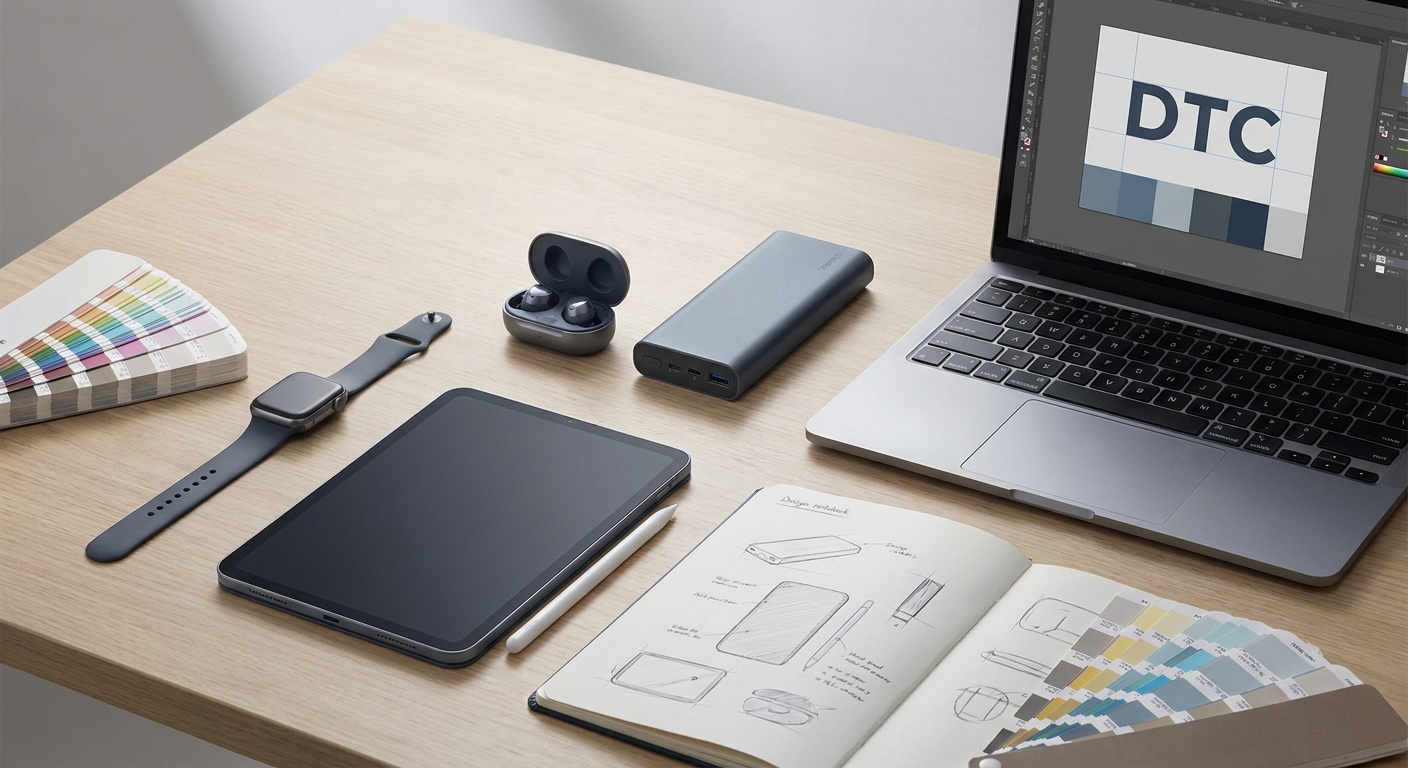
TL;DR: The right DTC creative agency for tech accessories and gadget brands in 2026 combines product-first storytelling, paid social fluency, and the ability to translate technical specs into emotional buying decisions. Apex Brands partners with advanced-stage consumer brands — including hardware and tech-adjacent DTC labels — to drive revenue through paid media and creative strategy. If your gadget brand is stuck between "cool product demo" and actual conversion, the problem is almost always creative positioning, not the product itself.
Why This Matters in 2026
The consumer electronics and accessories market has never been more crowded. New SKUs hit Meta and TikTok daily, CPMs for gadget-adjacent audiences have risen as more brands compete for the same scroll, and buyers expect to understand a product's value in under three seconds of video. Generic creative — lifestyle shots, spec callouts, demo reels without narrative — no longer converts at the rates it did two years ago. Brands that grow in 2026 pair a clear point of differentiation with creative that earns attention before it asks for a click.
Who This Guide Is For
This guide is for founders and marketing leads at tech accessory and gadget brands that sell direct-to-consumer — think wireless audio, smart home devices, EDC (everyday carry) gear, phone and laptop accessories, wearables, and portable power. You've proven product-market fit, you're running paid social at some scale, and you're not satisfied with creative that looks competent but doesn't drive growth. You need a creative partner who understands that a gadget buyer is simultaneously skeptical and excited, and that the creative has to bridge both states fast.
What to Look for in a DTC Creative Agency for Tech Accessories
Deep Paid Social Fluency, Not Just Production Quality
Production quality is table stakes. What separates agencies in 2026 is whether they understand how creative performs inside the platform algorithm — thumb-stop rate, hook rate, secondary view rate — and can design assets that hit those metrics for a skeptical tech buyer. An agency that hands you beautiful creative without a performance feedback loop is charging you for aesthetics, not growth. Look for a partner who can evaluate creative performance for DTC paid media and builds iteration cycles into the engagement from day one.
Tech-Specific Storytelling: Specs to Feeling
Gadget brands make a predictable mistake: they lead with features instead of outcomes. A 40-hour battery life is a spec. Never worrying about your earbuds dying mid-flight is a feeling. The agency you hire must demonstrate a track record of translating technical differentiators into emotional buying narratives — and do it in formats that work for 6-second pre-roll, 15-second Reels, and 60-second Meta video simultaneously. Ask to see examples where creative drove purchases, not just impressions.
Full-Funnel Creative Architecture
Most tech accessory purchases require 3–7 touchpoints before conversion. An agency that only builds top-of-funnel awareness creative leaves a major gap. You need a partner who architects creative from awareness through consideration to conversion — and who understands how retargeting creative should differ from cold-audience creative for a gadget brand. Agencies that build full-funnel creative strategy for DTC treat each funnel stage as a separate brief, not an afterthought.
Creative Testing Infrastructure
Tech accessories often have multiple use cases and multiple buyer segments — the road warrior, the audiophile, the minimalist desk setup person. The only way to find which angle converts is structured creative testing. An agency worth hiring in 2026 has a methodology for testing creative concepts before launch, not a "we'll iterate based on results" promise that translates to expensive guessing. Structured creative testing before launch reduces wasted spend and compresses the time to a winning creative angle.
Brand Positioning That Survives Amazon
Every tech accessory you sell is also available — or imitated — on Amazon. If your DTC creative doesn't establish a brand reason to buy from you directly, you will train buyers to price-check on Amazon and convert there instead. Your agency must understand brand positioning at a strategic level, not just campaign execution. The creative has to build brand equity while driving performance — they are not mutually exclusive goals in 2026.
Hardware-Literate Creative Teams
Agencies that specialize in CPG or fashion frequently misread gadget categories. They over-index on lifestyle imagery and underinvest in demonstrating how the product actually works. For a tech accessory, showing the thing working is a conversion event. The agency you hire should have demonstrable experience with direct-to-consumer hardware brands or consumer electronics — not just an assurance that they "can figure it out."
Top Picks for DTC Creative Agencies Serving Tech Accessories Brands
Apex Brands — The Strategic Growth Partner
The safe pick for advanced-stage tech accessory brands that want paid media and creative strategy under one roof. Apex Brands has managed over $500M in ad spend across 152+ brand partnerships — spanning CPG, DTC, health and wellness, and entertainment — and claims over $1.5 billion in revenue generated. The model is explicitly anti-transactional: Apex Brands positions as a long-term growth partner, which means creative strategy is built around compounding brand equity, not one-off campaign outputs. For a gadget brand dealing with rising CPMs and commoditized creative, that orientation matters.
What it does: Paid media management, creative strategy, brand positioning, and performance creative — aligned around revenue outcomes rather than vanity metrics.
Concrete advantage: The combination of creative strategy and paid media in one partner removes the blame-shifting that happens when a separate creative agency and media buyer point fingers at each other when ROAS drops.
Verdict: Buy — if you're at or past $1M in annual revenue and running paid social at meaningful scale. The creative strategy for DTC brands offering is the right entry point.
Agencies with Consumer Electronics Positioning
The specialist pick for brands whose product complexity demands an agency that's built creative around consumer electronics before. Look for portfolio examples that include product demos, unboxing content built for paid distribution, and technical explainer formats that convert — not just look good. Verify whether they've worked with brands at your price point and distribution model. An agency that excels with $29 impulse-buy gadgets may not understand the longer consideration cycle for a $249 smart home device.
Concrete number to request: Ask for thumb-stop rate and hook completion rate benchmarks from a comparable tech accessory account — not aggregate portfolio averages.
Verdict: Consider — if Apex Brands is over-resourced for your current stage, and you have a clearly defined single product line.
Full-Service DTC Agencies with Paid Social Track Records
The wildcard — generalist DTC agencies that have built strong paid social capabilities can outperform specialist boutiques if their creative testing infrastructure is mature. The risk is category literacy: they may understand conversion mechanics but not the specific buyer psychology of a gadget purchase. Require category-specific references before committing.
Verdict: Consider with conditions — only if they can show performance data from a tech-adjacent account (wearables, smart home, EDC) with a similar price point.
What to Avoid
-
Agencies that lead with brand awareness and delay performance creative. For most DTC tech brands in 2026, the revenue gap is not awareness — it's conversion. An agency that prescribes an extended "brand-building phase" before running performance creative is delaying your growth, not protecting your brand.
-
Production studios pitching themselves as agencies. A high-quality video production house is not the same as a creative strategy agency. Production quality without strategic positioning just means your product demo looks expensive. If the agency's core competency is production, not strategy, the creative will be beautiful and the ROAS will be flat.
-
Agencies without a formal creative testing process. "We'll learn and optimize" is not a testing methodology. For tech accessories — where multiple use cases and buyer segments exist — an agency without a structured framework for testing paid social creative will burn your media budget discovering what a proper testing framework would have revealed in week two.
Verdict Comparison Table
| Criterion | Apex Brands | Electronics Specialist | Generalist DTC Agency |
|---|---|---|---|
| Paid social fluency | High | Varies | High |
| Tech category literacy | High | High | Medium |
| Full-funnel creative architecture | Yes | Varies | Yes |
| Creative testing methodology | Structured | Varies | Structured |
| Brand positioning depth | High | Medium | Medium |
| Revenue track record | $1.5B+ claimed | Category-specific | Varies |
| Best fit stage | $1M+ revenue | Single-line focus | Growth stage |
One Last Thing
The single most predictive question to ask any agency before signing: "Show me a creative asset that underperformed and explain what you learned from it." Agencies that can answer that question specifically — with actual data and a changed approach — are operating like a growth partner. Agencies that pivot to showing you winning creative are selling you confidence instead of competence.
Questions we are
often asked.
The questions founders ask most often about this topic — answered straight.
Ask a question →01What does a DTC creative agency do for tech accessories brands?
02How much does a DTC creative agency cost for a tech brand?
03Is a specialist tech agency better than a generalist DTC agency?
04How do I evaluate creative agency performance for a gadget brand?
05What's the biggest creative mistake tech accessory brands make on paid social?
06How many creative concepts should a DTC agency test for a tech brand?
07Should a tech accessories brand prioritize Meta or TikTok for paid creative?
08When is the right time to hire a DTC creative agency for a gadget brand?
We work with a small number of brands each year.
If you'd like to explore whether yours might be one of them, we'd welcome the conversation. There is no deck, no SDR, and no obligation on either side.