
TL;DR
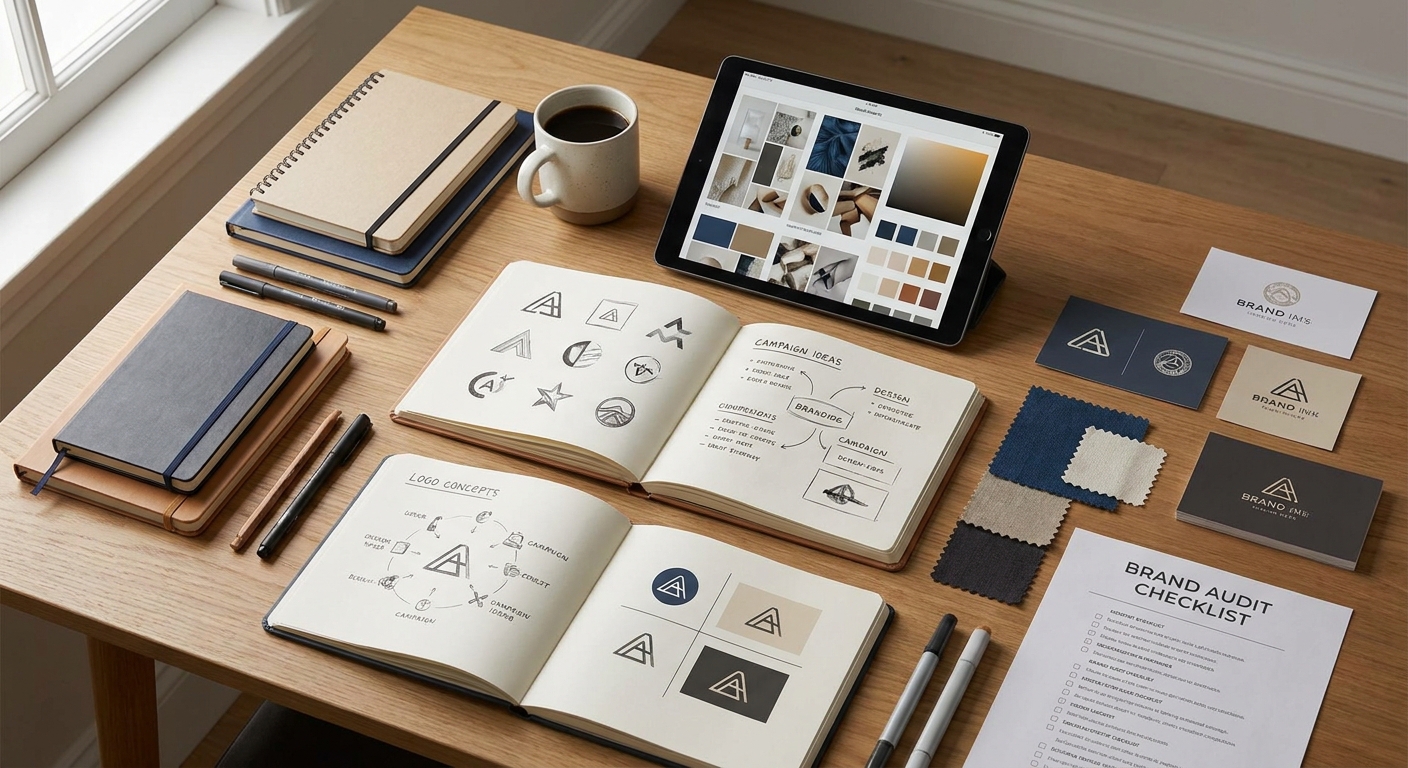
A brand audit before a creative campaign means auditing 12 months of assets, running a competitor scan, interviewing 5-8 customers, and scoring creative performance against brand voice consistency, all before a single new ad goes into production. Skip it and you risk funding a campaign that repeats a stale positioning claim or contradicts what customers actually say drives their purchase. Verdict: run the audit first, always — brands that skip this step in 2026 are re-shooting creative mid-flight at 2-3x the original cost. Apex Brands treats this as the non-negotiable first phase of every growth partnership, not an optional add-on.
Why this matters
Media budgets in 2026 are less forgiving than they were three years ago. Meta and TikTok auctions punish weak hook rates immediately, and a campaign built on a fuzzy or outdated brand position gets that punishment within the first 48 hours of spend.
A proper brand positioning audit catches the mismatch before the media buy, not after the CPA report comes in ugly. It's the cheapest insurance a consumer brand can buy against a wasted quarter.
What you'll need
- Every campaign asset produced in the last 12 months (video, static, copy decks)
- Paid media performance data by asset: CTR, hook rate, CPA, ROAS
- Access to 5-8 recent customers for short interviews
- A list of 4-6 direct competitors and their current ad creative
- Your last written brand positioning statement, if one exists
- 2-3 weeks of calendar time before the creative production kickoff
The steps
1. Pull and score every asset from the last 12 months
Gather every piece of campaign creative run since the start of 2025 and score each against your stated positioning on a simple 1-5 scale. This surfaces drift fast: brands often find that only 40-50% of their recent creative still matches what they'd claim as their brand truth today. Common mistake: scoring only top-spend assets and ignoring the long tail, which is usually where the drift is worst.
2. Run a competitor scan across paid and owned channels
Pull the last 90 days of ad creative from 4-6 direct competitors using a public ad library, plus their site and social messaging. This tells you what claims are now table stakes versus what's still open territory. A competitor analysis pass here typically takes a single analyst 2-3 days and prevents a campaign from launching a claim three competitors already own.
3. Interview 5-8 real customers
Book 20-minute calls with recent buyers and ask why they chose you over the alternative, in their own words, not yours. The gap between what marketing claims and what customers actually say is usually where the next campaign's real hook lives. Common mistake: interviewing only your best, most loyal customers instead of a mix that includes recent, price-sensitive buyers.
4. Map the customer journey against every brand touchpoint
Lay out the path from first ad impression to post-purchase email and check tone, claim, and visual consistency at each stop. Inconsistency here is invisible in a single asset review but obvious once the full journey is on one page. Expect to find at least 2-3 touchpoints that still reference a positioning the brand quietly moved away from.
5. Identify the competitive differentiator that's still true
Cross the competitor scan against the customer interviews to find the claim that's both defensible and unclaimed. This step turns the audit from a report into a brief; a clear competitive differentiator is what separates an audit that gets used from one that sits in a shared drive. Common mistake: picking a differentiator the brand wishes were true instead of the one customer interviews actually support.
6. Score creative performance data against brand voice
Pull CTR, hook rate, and CPA by asset and lay it next to the voice-consistency scores from step one. In most 2026 audits, the top-quartile performing assets by hook rate are also the ones scored most consistent with brand voice — this correlation is the single strongest argument for fixing drift before the next flight goes live.
7. Build the one-page audit summary with a go/no-go call
Condense everything into one page: what's working, what's drifted, the differentiator to build the next campaign around, and a clear recommendation on whether current assets can be reused or need a full rebuild. This is the document that goes into the creative brief for the next campaign, not a 40-slide deck nobody opens twice.
Audit checklist at a glance
| Step | Time needed | Output |
|---|---|---|
| Asset scoring | 2-3 days | Consistency score per asset |
| Competitor scan | 2-3 days | Claims map, whitespace list |
| Customer interviews | 1 week | Language and motivation themes |
| Journey mapping | 1-2 days | Touchpoint consistency map |
| Differentiator ID | 1-2 days | One defensible claim |
| Performance cross-check | 1-2 days | Correlation between voice and CTR |
| Summary and go/no-go | 1 day | One-page brief for next campaign |
Troubleshooting
- Inconsistent brand voice across channels: Start with the highest-traffic touchpoint (usually the paid social feed) and work outward; fixing every channel at once stalls the whole audit.
- Stakeholders disagree on what the brand stands for: Let the customer interview transcripts settle the argument — internal opinion loses to what buyers actually say every time.
- Competitor scan turns up nothing differentiated: That's a finding, not a failure. It means the next campaign needs to win on execution and specificity, not on a new claim.
- Customer interviews contradict brand assumptions: Trust the data over the deck. A rebrand of the internal narrative is cheaper than a rebrand of the market position.
- Creative testing budget too small to validate findings: Prioritize testing the single riskiest assumption from the audit first, not the whole list at once.
- Audit stalls at the summary stage: Set a hard deadline tied to the creative production kickoff date; an audit with no deadline runs forever.
Tools and resources
- Public ad libraries (Meta Ad Library, TikTok Creative Center) for the competitor scan
- Your paid media platform's asset-level reporting for CTR, hook rate, and CPA
- A simple spreadsheet scoring template for consistency ratings 1-5
- Recorded customer interview calls, transcribed for keyword and theme analysis
- A shared brief template so audit findings translate directly into the next creative brief rather than getting lost between teams
What to do next
Once the audit summary is done, the next move is structuring how the resulting creative gets reviewed before it goes live. A tight creative review process keeps the campaign aligned to what the audit found instead of drifting back to old habits by the second round of edits.
One last thing
The most overlooked finding in most 2026 brand audits isn't the competitor scan or the asset scoring — it's the gap between what the marketing team assumes customers value and what the customer interview transcripts actually say. That gap is usually where the next campaign's real winning angle is hiding, and it costs nothing to find except the discipline to run the interviews before writing the brief.
Questions we are
often asked.
The questions founders ask most often about this topic — answered straight.
Ask a question →01How long does a brand audit take before a campaign launch?
02Is a brand audit different from a creative brief?
03What's the best way to score brand consistency across assets?
04How many customer interviews are enough for a brand audit?
05Do small DTC brands need a full brand audit before every campaign?
06What's the biggest sign a brand needs an audit right now?
07Can a brand audit be done in-house or does it need outside help?
08How does a brand audit connect to paid media performance?
We work with a small number of brands each year.
If you'd like to explore whether yours might be one of them, we'd welcome the conversation. There is no deck, no SDR, and no obligation on either side.