
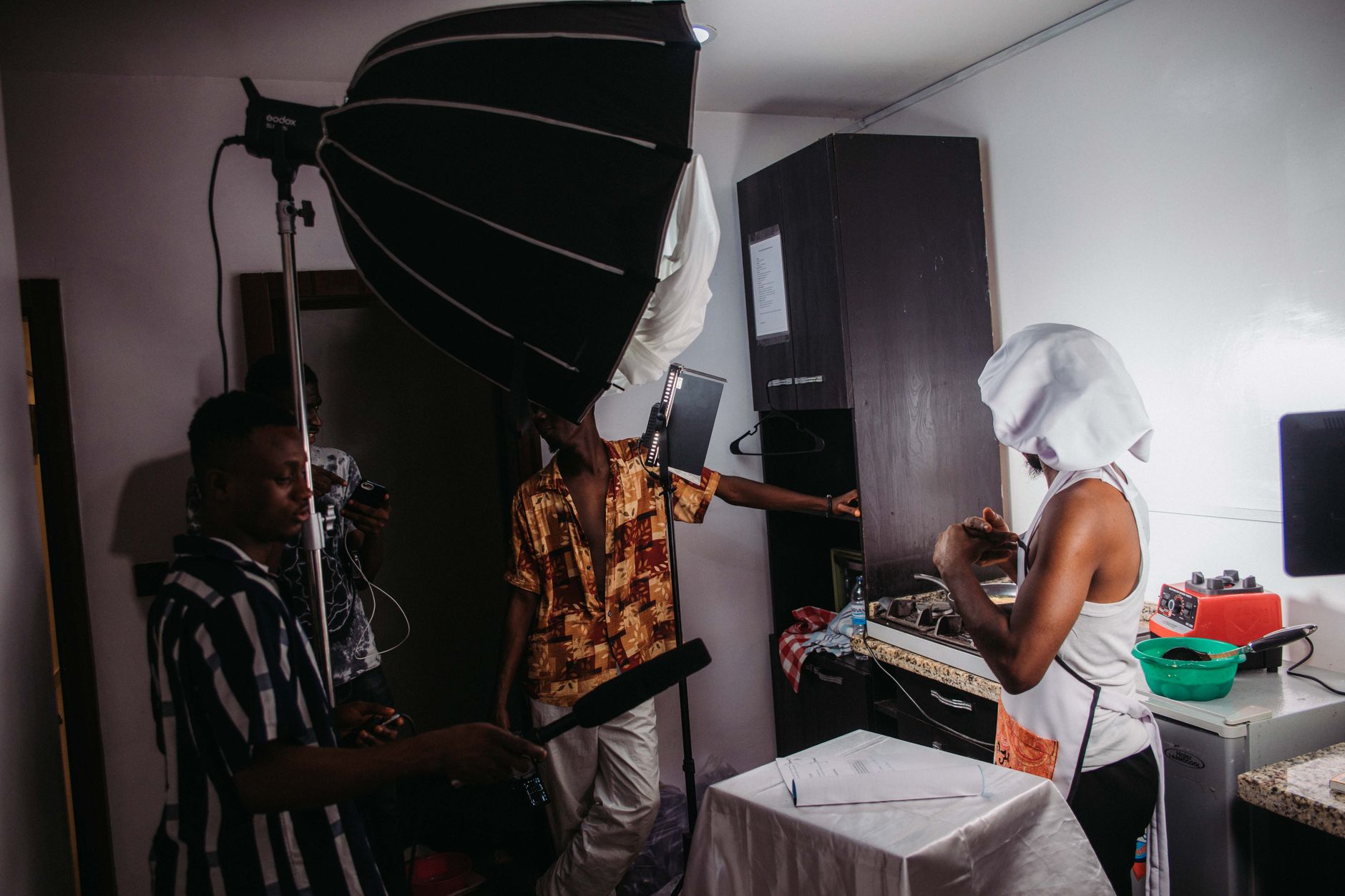
TL;DR: To brief a video production team on brand creative, you need 6 core inputs ready before the first call: the campaign objective, the target audience profile, the brand's visual and tonal guardrails, the specific deliverables list, the platform requirements, and a reference reel. Skip any one of these and you will spend the first two revision rounds rebuilding context the brief should have provided. This guide walks through each step with the specificity a DTC or e-commerce brand actually needs in 2026.
Why This Matters
Video production teams — even experienced ones — work from the information you give them. They are not brand strategists by default. When the brief is thin, directors make assumptions, editors fill gaps with generic transitions, and the final cut looks like it could belong to any brand in your category. For DTC brands competing on differentiation, generic is fatal. A well-structured brief is not a courtesy to the team; it is the primary creative control mechanism you have.
What You'll Need
Before you write a single line of the brief, gather these inputs:
- Campaign objective — one measurable outcome (e.g., 30-second cut for Meta feed targeting cold audiences, goal: 3-second video view rate above 25%)
- Brand positioning statement — your single-sentence definition of who you are and for whom
- Target audience profile — at minimum: age range, 2–3 psychographic descriptors, 1 specific pain point your product solves
- Existing brand assets — logo files, color hex codes, approved typefaces, any locked audio/music direction
- Deliverables list — exact specs: aspect ratios, lengths, number of cuts, file format
- Reference reel — 3–5 video references, annotated with why each is relevant (not just a Pinterest dump)
- Timeline with locked dates — shoot date, first cut delivery, revision windows, final delivery
- Budget range communicated to the team — production decisions (locations, talent, equipment) scale directly to budget; withholding this forces guesswork
Allow at least 5 business days to compile these before the kickoff call. Rushing the brief is the single most common reason shoots get rescheduled.
The Steps
Step 1: Define the Single Job the Video Must Do
Every video brief should open with one sentence that names the job: "This video must make a cold Meta audience stop scrolling and associate [brand] with [specific feeling or claim] within 3 seconds." That sentence governs every downstream creative decision — casting, opening frame, pacing, music tempo. When the production team can recite the job back to you unprompted, the brief has landed. If they can't, rewrite it until they can.
The most common mistake here is listing 4 goals: awareness, conversion, brand equity, and product education. Pick one. The edit will serve the primary job; the others may benefit incidentally.
Step 2: Write the Audience Profile as a Scene, Not a Demographic
A demographic tells the director "women 28–40, HHI $75K+." A scene tells them what the viewer is doing when they see the ad, what they want in that moment, and what would make them feel seen. For a DTC fitness brand in 2026, that might read: "She's on her phone at 8 p.m. after a 10-hour day, has already skipped one workout this week, and is simultaneously proud of her discipline and frustrated by her progress." That scene informs casting, lighting mood, music energy, and even the line of copy the video can't live without.
Pair the scene with 2–3 lines about what this audience has already seen — because they're also seeing every competitor's ad. Name the clichés they're immune to so the director actively avoids them.
Step 3: Articulate Brand Visual and Tonal Guardrails
This section has two parts: what the brand is, and what it is not. Both are mandatory. A brand that says "we're warm and approachable" without specifying "not soft — we have an edge" will get a pastel color grade and gentle acoustic guitar. Guardrails work in pairs.
For each guardrail, give a concrete visual example:
- Color temperature: "Warm but not golden-hour saturated — think late afternoon shade, not magic hour"
- Talent direction: "Confident, not aspirational-glossy; real people who happen to be attractive, not models who happen to be holding the product"
- Music: "Tempo between 95–115 BPM, indie or alternative lean, no EDM drops"
- Pacing: "Cuts every 1.5–2.5 seconds for the first 5 seconds; slow to 4–6 seconds for product detail shots"
If you have a brand style guide, link it — but do not use the style guide as the brief. Extract the 5 directives most relevant to this specific production and put them in plain language the director can read in 90 seconds.
Step 4: Build the Deliverables Table Before the Kickoff Call
Ambiguous deliverables cause scope creep and missed deadlines. Before any call with the production team, populate a table with exact specs:
| Format | Aspect Ratio | Length | Quantity | Notes |
|---|---|---|---|---|
| Meta feed | 1:1 | 15s, 30s | 2 each | Hard captions required |
| Meta Stories / Reels | 9:16 | 15s | 2 | First 3s no logo |
| YouTube pre-roll | 16:9 | 30s | 1 | Skippable after 5s — hook must land in 5s |
| Email / landing page | 16:9 | 60s | 1 | No sound assumed |
This table does two things: it lets the production team cost the shoot accurately, and it forces you to think through post-production needs before day one. In 2026, most DTC campaigns require at least 6–8 unique deliverable cuts from a single shoot day — build that into the brief, not the revision call.
Step 5: Present the Reference Reel with Annotations
A reference reel without annotations is a mood board. A reference reel with annotations is a creative directive. For each reference, write 1–2 sentences explaining which specific element you're referencing — and what you are not asking the team to replicate.
Example: "Reference 3 (Gymshark 2024 campaign): the casting approach — diverse, athletic, unglamorous. We are NOT referencing the editing pace, which is too fast for our audience."
Limit references to 5. More than 5 creates contradictions the director will spend the kickoff call resolving.
Step 6: Set Revision Rules Upfront
Every brief should include the revision protocol before work begins: how many rounds are included, what constitutes a round versus a minor note, who on your side has final approval authority, and the turnaround time expected per round. This is not an administrative formality — it is the mechanism that prevents the production team from receiving conflicting feedback from 3 stakeholders after the first cut.
Name one internal decision-maker. If your CMO and your brand director both have veto power, the production team will stall in week 3. One voice. One approval chain. State it in the brief.
Troubleshooting
The first cut looks nothing like the references.
The brief described a feeling without naming specific visual mechanics. Go back to Step 3 and add concrete color temperature, talent direction, and pacing specs. Reference feelings are not briefs.
The team keeps asking questions the brief should have answered.
The brief has gaps. Document every question asked in the kickoff call, add the answers to the brief, and redistribute. Treat repeat questions as a brief audit.
Stakeholders are giving the production team conflicting feedback.
The approval chain was never locked. Stop feedback flowing directly to the production team. Route all notes through one internal owner and consolidate before sending.
The video tests poorly despite strong production quality.
The deliverables were built for brand satisfaction, not platform behavior. Revisit Step 4 — check whether the hook lands in the first 3 seconds and whether the video works without sound.
The shoot ran over budget.
The deliverables table was not built before the brief was issued. The team had to estimate scope from vague descriptions. Pre-production budget alignment requires a locked deliverables list, not a general scope description.
Revisions are running past 3 rounds.
Feedback is directional and subjective ("make it feel more premium") rather than specific ("increase color saturation by 15%, recut the product shot to 4 seconds"). Teach your team to give measurable notes.
Tools and Resources
- Brief template: A structured one-page template covering all 6 inputs from Step 1 covers the minimum viable brief. Keep it to 1 page; anything longer gets skimmed.
- Deliverables table: Build it in a shared doc (Notion, Google Sheets) so the production team can comment directly on specs.
- Reference reel: Loom or Frame.io with timestamped annotations keeps references contextual.
- Approval workflow: Frame.io or Wipster for video review; avoids email chains where feedback gets buried.
- For brands that need the upstream strategy work done before the brief is written, how to turn brand strategy into paid ad creative covers the translation layer between positioning and production input.
- If you're building out a full creative production process across multiple channels, how to manage creative production for multiple DTC channels covers the operational framework.
What to Do Next
Once the video is in post-production, the brief's job is not finished. Use it as the evaluation rubric for the first cut review — does the opening frame deliver the job defined in Step 1? Does the talent casting match the audience scene from Step 2? If the answer to either is no, the note is not "I don't like this" — it's "this conflicts with brief section X, here is the specific correction."
For brands ready to go upstream and build the creative strategy that feeds every brief, how to develop a campaign concept from a creative brief is the logical next guide.
One Last Thing
The most expensive brief mistake in DTC video production is not a missing spec — it is a missing enemy. The best briefs name one thing the video must not look like: the competitor's visual language, the category cliché, the generic lifestyle aesthetic. When a director knows what they're fighting against, they make bolder creative choices. Give them an enemy in 2026 and the work gets sharper every time.
Questions we are
often asked.
The questions founders ask most often about this topic — answered straight.
Ask a question →01What should a video production brief include?
02How long should a creative brief for video production be?
03How many reference videos should I include in a brief?
04How far in advance should I send the brief to the production team?
05What's the difference between a creative brief and a production brief?
06Who should approve the brief before it goes to the production team?
07How do I brief a video team on brand tone?
08Can I use the same brief for paid social and brand video?
We work with a small number of brands each year.
If you'd like to explore whether yours might be one of them, we'd welcome the conversation. There is no deck, no SDR, and no obligation on either side.