
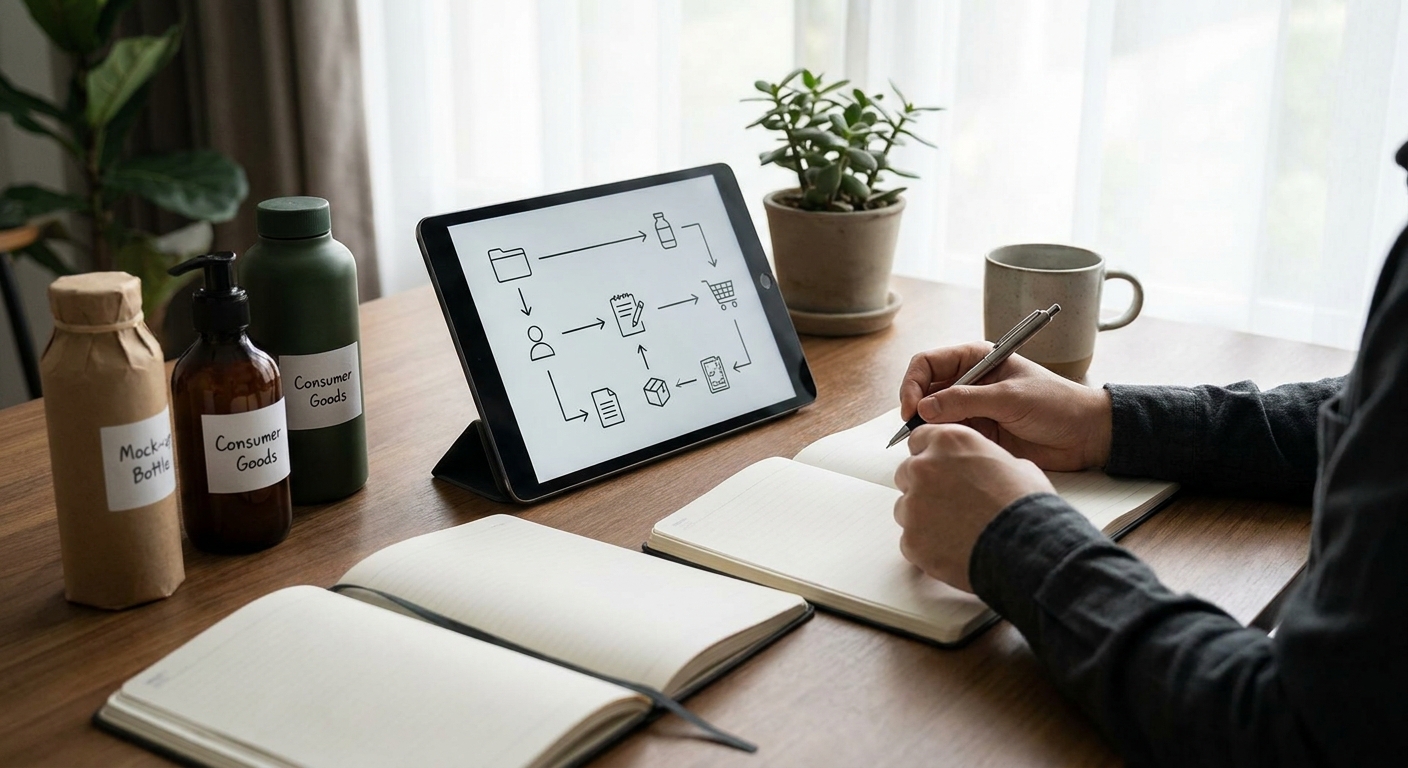
TL;DR: To develop a go-to-market strategy for a CPG brand, you need four things locked before spend goes live — a defined buyer segment, a positioning statement tied to a real differentiator, a channel sequence (retail, DTC, or both), and a KPI framework tied to CAC and payback period. Brands that skip the positioning step, like most CPG launches that go straight to paid social, burn 60-90 days of budget testing creative that never had a strategic foundation. Verdict: build positioning and audience definition first, then let media strategy follow — not the other way around.
Why this matters
CPG shelves and DTC feeds are both saturated in 2026. A launch without a defined go-to-market sequence gets outspent by category incumbents with bigger budgets and, worse, gets ignored by the retail buyers and paid platforms that decide who gets distribution and reach. Apex Brands has worked across 152+ brand partnerships and managed more than $500 million in ad spend, and the pattern holds across categories: brands that treat go-to-market as a media plan instead of a CPG marketing strategy spend more to get less.
A go-to-market strategy is not a launch calendar. It's the set of decisions — who you're selling to, what makes you different, which channels earn attention first, and how you measure whether it worked — that everything else in the launch gets built on.
What you'll need
- A defined buyer segment (demographic and psychographic, not just "health-conscious millennials")
- Competitive audit covering both retail shelf and DTC/paid social competitors
- A positioning statement grounded in a specific, ownable differentiator
- A media budget with at least 90 days of runway before you judge results
- Creative assets tested before full spend (not built during the launch week)
- A KPI framework that ties CAC, payback period, and retention targets to the budget
The steps
1. Define your category and buyer segment
This determines every decision after it. A CPG brand launching in functional beverages needs a different buyer definition than one launching in premium skincare, and the mistake most founders make is defining the buyer too broadly — "women 25-45" tells you nothing actionable.
Get specific: what are they currently buying, why are they dissatisfied with it, and what occasion or moment does your product interrupt. Common mistake: defining the audience by demographics instead of by the problem they're already trying to solve.
2. Audit the competitive shelf, retail and DTC both
CPG brands compete on two fronts in 2026 — the physical shelf and the paid social feed — and most go-to-market plans only audit one. Pull the top 8-10 competitors across both channels and map their pricing, packaging claims, and ad creative angles.
Look for the gap nobody's claiming. A commodity-to-premium positioning shift usually starts here — the audit surfaces a claim every competitor is avoiding because it's harder to prove, and that claim becomes the wedge.
3. Build a positioning statement tied to one real differentiator
Positioning isn't a tagline — it's the single reason a buyer chooses you over the next six options on the shelf or in their feed. Pick one differentiator you can defend with a spec, an ingredient, a sourcing fact, or a result, and build the entire launch narrative around it.
Brands that try to claim three or four benefits at once dilute all of them. Expected outcome: a one-sentence positioning statement that a stranger could repeat back to you after hearing it once.
4. Choose your channel mix and launch sequence
Decide the order channels come online, not just which ones you'll use. Most CPG launches in 2026 sequence paid social first to build proof points (reviews, UGC, sales velocity), then layer in retail conversations once there's traction data to show buyers.
Set the sequence for 90 days: weeks 1-4 test creative and audience on a limited budget, weeks 5-8 scale what's working, weeks 9-12 sustain and start retail or marketplace conversations if that's the model.
5. Set a media budget and KPI framework before spend goes live
Without a target CAC and payback period defined ahead of time, every early result looks either great or terrible depending on mood. Set the number first: what CAC keeps this business viable at your margin structure, and what payback window is acceptable given your cash position.
Budget in three phases — a testing phase (10-15% of total launch budget), a scaling phase (60-70%), and a reserve (15-20%) held back for whatever channel outperforms once real data comes in. Common mistake: spending the full budget in phase one and having nothing left to scale the winner.
6. Build creative before spend, not during launch week
Creative built under launch-week pressure underperforms creative built and tested in advance. Produce 8-12 creative concepts spanning different angles — problem/solution, social proof, founder story, product demo — and test them against a small audience before the real budget turns on.
This step is where most CPG go-to-market plans lose weeks they don't have. Expected outcome: 2-3 creative winners identified before the 90-day clock starts, not discovered by week six.
7. Run the phased launch: seed, scale, sustain
Seed with a small audience and modest budget to confirm the positioning resonates and the creative converts. Scale once CAC lands within target range for at least 7-10 consecutive days, not a single good day. Sustain by rotating in new creative before fatigue sets in, typically every 2-3 weeks on paid social in 2026's climate.
A DTC beauty brand launch case study shows this phasing in practice — the seed phase surfaced the winning angle inside three weeks, and scaling followed once CAC held steady.
8. Measure and iterate after launch
Go-to-market doesn't end at launch day — it ends when CAC, retention, and margin all confirm the model works at scale. Review weekly for the first 90 days, then move to a monthly cadence once the metrics stabilize.
Troubleshooting
- Retail buyers pass on the brand. The positioning likely reads generic on paper — sharpen the one differentiator until it's specific enough to repeat without your slide deck.
- CAC spikes above target in month one. Normal during the seed phase. Don't scale spend until CAC holds steady for a full week, not one good day.
- Creative fatigues within two weeks. Rotate in new angles from your original 8-12 concept bank rather than tweaking the same winning ad.
- Positioning tests flat with the target segment. Go back to the buyer definition — a positioning statement can be well-written and still miss if it's aimed at the wrong problem.
- Budget runs out before results show. The three-phase budget split (test/scale/reserve) exists to prevent this — if it happened, the testing phase probably ran too long or too wide.
Tools and resources
- Competitive shelf and paid-social audit template
- Positioning statement worksheet (one differentiator, one sentence)
- 90-day media budget tracker split into test, scale, and reserve phases
- Creative testing framework for pre-launch validation
- CAC and payback period calculator tied to margin structure
What to do next
Once the CPG-specific sequence is set, the next decision is whether your model leans DTC-first or omnichannel from day one — that changes the channel mix and the retail timeline. A closer look at how to build a go-to-market strategy for a DTC brand covers the DTC-specific version of this same sequence.
One last thing
The part most CPG founders underestimate isn't the media budget — it's the reserve. Brands that hold back 15-20% of launch budget for the channel that actually outperforms consistently outscale the ones that spend everything in the test phase and have nothing left when the winner shows up. Apex Brands has seen that reserve decide whether a launch scales past month three or stalls out waiting for more budget approval.
Questions we are
often asked.
The questions founders ask most often about this topic — answered straight.
Ask a question →01What's the first step in a CPG go-to-market strategy?
02How long should a CPG launch run before judging results?
03Is retail or DTC better for a CPG launch in 2026?
04How much should a CPG brand budget for a go-to-market launch?
05What's the biggest mistake in CPG go-to-market planning?
06How do you know if positioning is working before launch?
07Should creative be built before or during the launch?
08How often should CPG creative rotate post-launch?
We work with a small number of brands each year.
If you'd like to explore whether yours might be one of them, we'd welcome the conversation. There is no deck, no SDR, and no obligation on either side.