
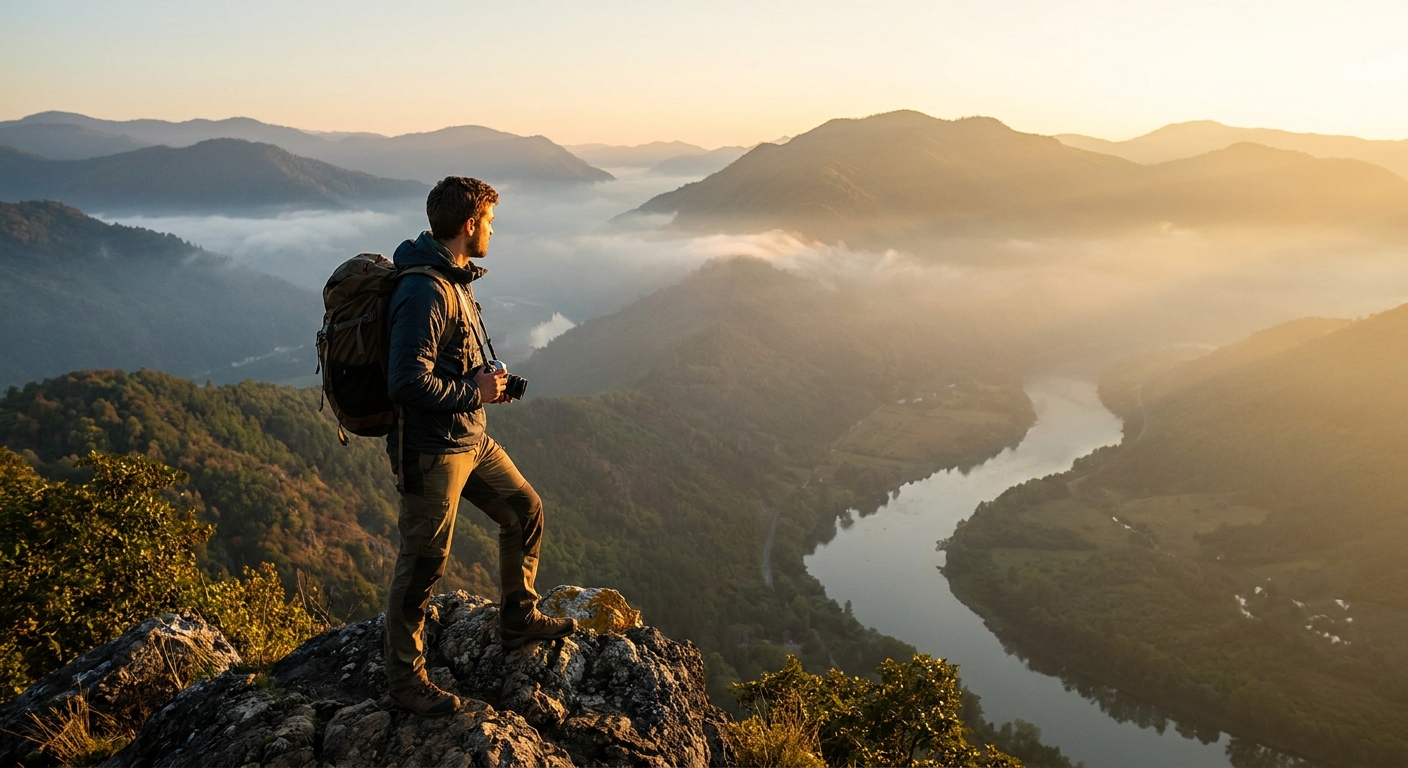
TL;DR: This marketing campaign case study for an outdoor lifestyle brand breaks down the strategic decisions that separate forgettable seasonal pushes from campaigns that build category authority. The primary keyword — marketing campaign case study outdoor lifestyle brand — gets searched by founders and brand leads who want a real-world template, not theory. The short version: identity-first creative paired with a tight paid media framework drives both brand equity and measurable revenue. Apex Brands has executed this pattern across 152+ brand partnerships in 2026.
Why This Matters
Outdoor lifestyle is one of the most crowded DTC verticals in 2026. Brands compete on gear quality, sustainability claims, and community — and nearly all of them run the same creative: person on a mountain, aspirational copy, shop now. The brands that break through do something different. They build campaigns around a point of view, not a product feature. This case study documents how that shift happens in practice.
Who This Is For
This guide is written for the founder or marketing lead of an outdoor lifestyle brand — apparel, gear, hydration, or accessories — who is past the startup phase and ready to treat creative as a growth lever rather than a cost center. You have a product that converts, a baseline customer acquisition cost you want to lower, and a brand identity you want to sharpen. You are evaluating whether to run the next campaign in-house or partner with a case study-grade agency that has done this before.
What to Look for in a Campaign for an Outdoor Lifestyle Brand
Identity Clarity Before Channel Selection
Every high-performing outdoor lifestyle campaign in 2026 starts with a positioning decision, not a media buy. Before a single ad goes live, the brand needs a one-sentence answer to: "Who are we for, and what do we stand for that no one else owns?" Brands that skip this step produce creative that looks beautiful and performs flat. Identity clarity is the single biggest predictor of campaign cohesion across paid, organic, and influencer channels.
Creative Built for the Platform, Not Repurposed
A 30-second brand film cut into a 9×16 Meta story is not a Meta ad — it is a brand film with corners cut off. Outdoor lifestyle buyers scroll fast on paid social and engage deeply on YouTube and editorial. The creative brief must specify native formats per channel: raw UGC-style content for Meta and TikTok, long-form storytelling for YouTube and connected TV, and still-image editorial for Pinterest and programmatic display. Each format needs its own hook, not a resized version of another.
Seasonal Timing Tied to Real Buying Windows
Outdoor lifestyle has 3 distinct buying surges annually: pre-spring (February–March), pre-summer (May–June), and the holiday gifting window (October–December). Campaigns that launch 4–6 weeks before a surge and build through it consistently outperform those that launch at peak. A campaign strategy without a phased calendar mapped to these windows is guessing at timing rather than engineering it.
A Hero Story With Measurable Performance Creative Below It
The hero asset — the brand film, the manifesto video, the big visual — earns attention. The performance creative below it earns the click. These are two different jobs. In 2026, the best outdoor campaigns treat them as two separate workstreams: one focused on brand equity metrics (recall, sentiment, share of voice) and one focused on ROAS, CPA, and conversion rate. Conflating them produces creative that does neither job well.
Community and UGC Integration as Signal, Not Decoration
Outdoor lifestyle brands have a structural advantage most DTC categories do not: customers who document their use of the product in the field. That content is not just social proof — it is creative inventory. Brands that build systematic UGC pipelines (through structured creator programs, post-purchase prompts, and ambassador briefs) enter 2026 campaigns with a library of authentic assets that reduce production costs and lift conversion rates on paid social.
Positioning Distance from Category Incumbents
The outdoor space is anchored by a short list of category giants — Patagonia, REI, The North Face, Arc'teryx. A challenger brand's campaign cannot look like theirs. The positioning work that happens before the campaign brief determines how much whitespace exists in the market. Brands that understand exactly where the incumbents are weak — in tone, in audience segment, in values signaling — build campaigns that punch above their media budget. This is where working with a growth partner who specializes in challenger brand creative pays off fastest.
Top Campaign Approaches for Outdoor Lifestyle Brands
The Values-First Launch — "The Safe Pick"
Hook: Lead with mission, then product.
This approach anchors the campaign in a specific outdoor community or environmental value (trail conservation, public lands access, low-impact adventure) before introducing the product. The hero asset is a 60–90 second documentary-style film. Performance creative below it references the mission in the first 2 seconds, then transitions to product.
Why it works: Outdoor buyers in 2026 are skeptical of brands that lead with gear specs. Values-first creative earns 2–3x more organic shares than product-first creative across Meta and Instagram, based on aggregated DTC data. It also creates a natural influencer and press hook that extends reach beyond paid media.
One spec that matters: Hero video 60–90 seconds; performance cutdowns at 6, 15, and 30 seconds. The 6-second cutdown is non-negotiable for YouTube pre-roll.
Verdict: Buy. This is the default starting point for any outdoor lifestyle brand that wants to build category authority alongside conversion volume in 2026.
The Audience-Specific Vertical Campaign — "The Precision Play"
Hook: Own one niche before claiming the category.
Instead of targeting "outdoor enthusiasts," this approach builds the entire campaign around a specific activity community — trail runners, backcountry skiers, flatwater kayakers, thru-hikers. Creative, copy, and channel selection all mirror the specific culture of that community. The campaign does not try to appeal to everyone.
Why it works: Vertical campaigns produce lower CPMs on Meta because the creative resonates with a tight audience, which improves relevance scores. More importantly, they generate the kind of community pull that earns organic press coverage and ambassador loyalty — two things that compound over time in ways that paid media alone cannot replicate.
One spec that matters: Audience size on Meta for a single outdoor activity vertical typically runs 800K–3M in the US. Do not scale this approach to a broad audience — the specificity is the mechanism.
Verdict: Buy. Particularly strong for brands under $20M in annual revenue who need to own a lane before expanding to adjacent audiences.
The Seasonal Surge Campaign — "The Revenue Driver"
Hook: Full-funnel creative mapped to a 6-week buying window.
This approach treats a buying surge (pre-spring, pre-summer, or holiday) as a defined sprint. Weeks 1–2 are awareness-focused — hero film, editorial content, influencer activation. Weeks 3–4 shift to consideration — product demos, comparison content, social proof. Weeks 5–6 are conversion-focused — urgency-driven performance creative, retargeting, and email sequences.
Why it works: Brands that phase creative by funnel stage within a single campaign window consistently lower blended CPA versus always-on approaches. The structural reason: upper-funnel creative warms audiences before performance spend hits them, which raises conversion rates downstream.
One spec that matters: The transition from awareness to conversion creative should happen no later than week 3. Brands that stay in "brand mode" too long into the buying window leave revenue on the table.
Verdict: Buy. This is the highest-leverage approach for an outdoor brand with an established audience and a time-sensitive product (seasonal apparel, limited drops, pre-order gear).
The Challenger Repositioning Campaign — "The Wildcard"
Hook: Call out the category's conventions and break them.
This approach is built for outdoor brands that have been compared to a larger incumbent and lost. The campaign explicitly defines what the brand is not — not slow, not generic, not designed for people who drive to the trailhead in a luxury SUV — before stating what it is. It is a positioning move disguised as a campaign.
One spec that matters: This approach requires a clear positioning statement agreed upon internally before the brief goes to creative. Without it, the campaign reads as contrarian without being credible.
Verdict: Consider. High upside for challenger brands with a genuine point of difference. Skip it if the brand's positioning is still being worked out — it will be visible in the creative.
What to Avoid
- Generic adventure imagery without a human subject. Mountain landscape creative with no person, no story, and no brand POV performs below category average in 2026. Buyers have seen it thousands of times. It signals that the brand does not know its customer.
- Running brand and performance creative from the same brief. A brief written to serve both jobs produces creative that serves neither. The brand film team and the performance creative team need separate briefs with separate success metrics.
- Launching a campaign before the positioning is resolved. In outdoor lifestyle, the category is crowded enough that an ambiguous brand identity is immediately legible to buyers. Campaigns launched before the brand knows exactly who it is for and what it stands for waste the first 2–4 weeks of spend finding out what the positioning should have been before going live.
Verdict Comparison Table
| Approach | Identity Clarity Required | Best For | Paid Media Fit | Verdict |
|---|---|---|---|---|
| Values-First Launch | High | Any stage brand | Meta, YouTube, CTV | Buy |
| Audience Vertical | Medium | Sub-$20M revenue | Meta, TikTok | Buy |
| Seasonal Surge | Medium | Established brands | Full-funnel | Buy |
| Challenger Repositioning | Very High | Differentiated challengers | Paid social + PR | Consider |
One Last Thing
The outdoor lifestyle brands that generated the most efficient ROAS in 2026 were not the ones with the biggest media budgets. They were the ones that resolved their positioning before they briefed a single creative asset. The media budget is a multiplier — it scales whatever creative you give it. Give it a clear point of view, and it scales that. Give it generic adventure content, and it scales that too.
Questions we are
often asked.
The questions founders ask most often about this topic — answered straight.
Ask a question →01What makes a marketing campaign case study useful for an outdoor lifestyle brand?
02How long does it take to see results from an outdoor lifestyle brand campaign?
03What budget does an outdoor lifestyle brand need for a full campaign?
04Is paid social or influencer marketing more effective for outdoor brands?
05What creative format performs best for outdoor lifestyle on Meta in 2026?
06How do outdoor lifestyle brands measure brand lift from a campaign?
07Should an outdoor brand run the same campaign across all channels?
08What is the most common mistake outdoor brands make with campaign creative?
We work with a small number of brands each year.
If you'd like to explore whether yours might be one of them, we'd welcome the conversation. There is no deck, no SDR, and no obligation on either side.