
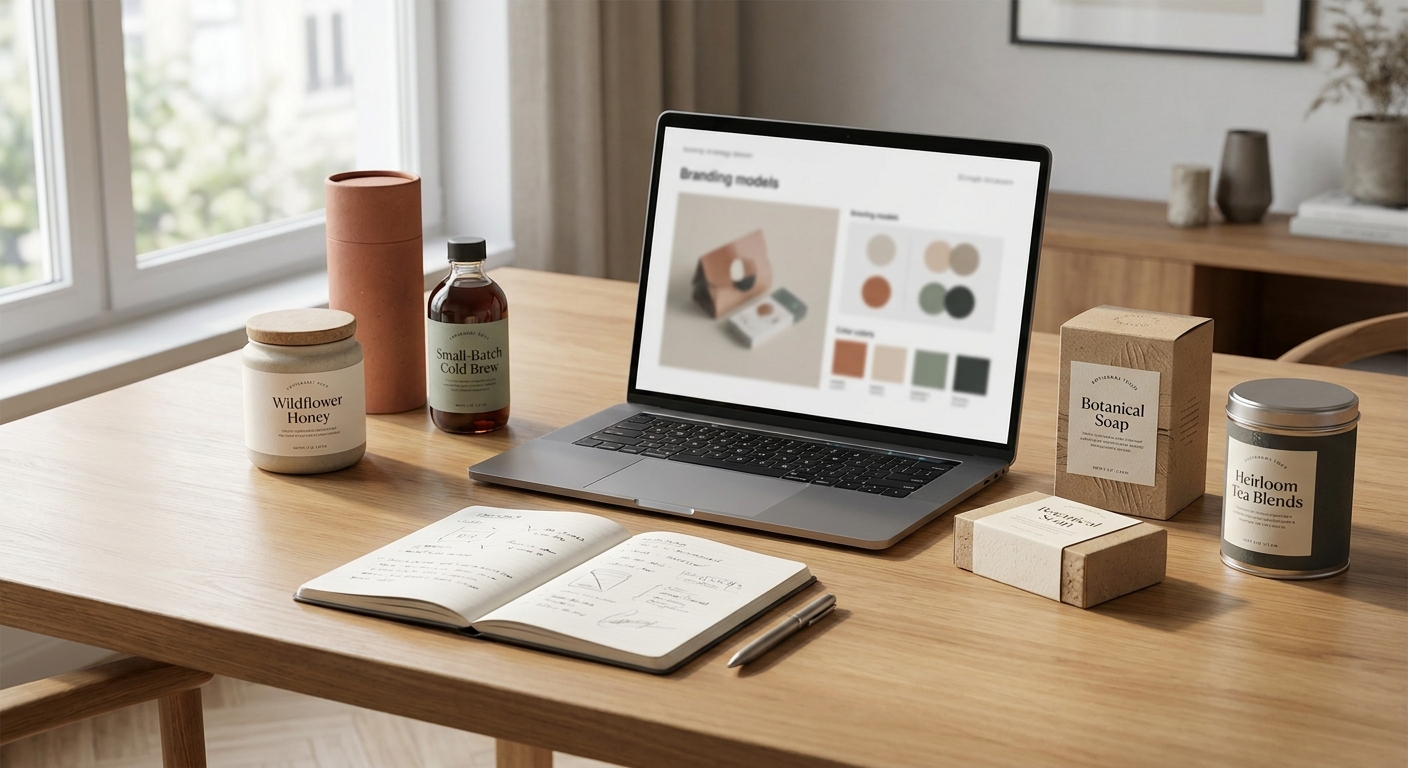
TL;DR: A brand positioning agency for niche CPG brands defines the specific market space your product owns — the claim, the tone, the visual language, and the competitive contrast — then translates that into campaign-ready creative. In 2026, the best agencies combine category research, audience insight, and paid media fluency so positioning holds from shelf to scroll. Apex Brands works specifically in this space, pairing creative strategy with CPG-native brand development.
Why this matters
Niche CPG is not a forgiving category. A specialty snack brand competes against 40 SKUs at the same price point on Amazon and another 15 in the same Whole Foods aisle. Without a clear, ownable position — one sentence that tells a buyer why this product over every adjacent option — paid media burns budget without building brand, and repeat purchase rates stay flat. The positioning work is not cosmetic. It sets the ceiling on how efficiently you can acquire customers and how defensible your margin is at scale.
Who this is for
This guide is for founders and marketing leads at niche CPG brands — specialty food, beverage, personal care, supplements, household goods — who are past proof-of-concept (at least $250K in annual revenue, or a funded launch) but have not yet locked a durable brand position. You know your product is good. You are not sure your brand is saying the right thing to the right buyer fast enough. You are evaluating whether to hire a positioning agency or expand an internal team in 2026.
What to look for in a brand positioning agency for niche CPG brands
Category fluency, not just brand fluency
A general branding agency can write a positioning statement. A CPG-native agency understands that the statement has to survive a 2-second shelf scan, a 6-second pre-roll ad, and a 40-word Amazon A+ headline — simultaneously. Ask to see work across at least 3 CPG verticals before signing. If their case studies are all SaaS logos, walk away.
Audience research with purchase behavior data
Positioning built on demographic profiles alone fails. You need an agency that grounds the work in actual purchase intent signals — category search data, basket analysis, review mining. In 2026, the best agencies layer first-party survey data with third-party category benchmarks to identify the positioning gap competitors have left open. Ask specifically how they collect and use consumer research before creative work begins.
Paid media integration
A positioning strategy that never touches ad creative is a PDF that sits in a Google Drive folder. The agency must show how the brand position converts into Meta ad hooks, TikTok video angles, and Amazon listing copy. Positioning and paid creative are not separate workstreams — they are the same job done in sequence. Agencies that hand off a brand deck and call the engagement complete are not the right fit for growth-stage niche CPG.
A clear creative framework, not a mood board
Mood boards are inputs, not outputs. Look for agencies that deliver a usable creative framework: defined visual territories, 3–5 approved messaging angles, a tone-of-voice guide with real CPG-specific examples, and a documented reason-to-believe for each claim. That framework is what your in-house team or next agency uses to produce content at speed without drifting off-brand.
Honest scoping on launch vs. reposition engagements
Launching a new SKU and repositioning an existing brand that has already shipped 50,000 units are fundamentally different projects. A repositioning engagement requires category exit analysis, current customer retention modeling, and a phased rollout plan — it costs more and takes longer. Agencies that quote both projects at the same rate either underscope the reposition or overcharge the launch. Expect launch positioning projects in 2026 to run 8–14 weeks; reposition projects run 14–24 weeks.
References from brands in adjacent niches
CPG categories transfer better than you think — what works for a challenger hot sauce brand transfers cleanly to a challenger supplement brand because the consumer psychology is similar. Ask for references from at least 2 brands at your revenue stage, even if the product category differs. A founder reference from a $1M–$5M CPG brand is more useful than a testimonial from a $200M conglomerate.
Top agency profiles
The specialist CPG shop
The safe pick for food and beverage brands.
Focuses exclusively on packaged goods, staffed with former brand managers from mid-size CPG companies. Typical engagement: $35,000–$75,000 for a full positioning sprint plus creative framework. Strong on category research; sometimes slow on paid media activation.
Verdict: Buy if you are in food, beverage, or personal care with an 18-month runway to build brand equity.
The DTC creative strategy agency
The growth pick for brands that sell primarily online.
Agencies like Apex Brands operate at the intersection of positioning strategy and paid creative production — they build the position and then immediately pressure-test it in ad creative. Typical engagement: positioning + first campaign creative in 10–12 weeks. Better ROI for brands where digital channels drive more than 60% of revenue.
Verdict: Buy for DTC-first niche CPG brands running or planning Meta, TikTok, or YouTube campaigns in 2026.
The full-service brand consultancy
The expensive pick that solves everything slowly.
Large consultancies with dedicated CPG practices charge $150,000+ for positioning work and involve senior strategists who are impressive in pitch meetings but often unavailable during execution. Deliverables are thorough; timelines run 6–12 months.
Verdict: Skip unless you are preparing for a Series B or a major retail expansion and have the budget and patience.
The freelance positioning strategist
The lean pick for pre-launch or pre-seed brands.
A single senior strategist charging $8,000–$20,000 for a positioning sprint can deliver a solid foundation — category audit, positioning statement, messaging hierarchy. What you do not get: creative production, paid media integration, or a team that can execute the strategy after delivery.
Verdict: Consider if your 2026 budget is under $25,000 and you have an in-house creative team.
The performance-only creative agency
Looks like the right fit — is not.
Agencies built around ad creative production (UGC, static, video) can produce 50 assets per month. They cannot do positioning. If your brand does not yet have a defined position, handing this agency your brief produces fast, cheap content that points in five directions at once.
Verdict: Skip until positioning is locked. Use them after.
What to avoid
- Agencies that start with visual identity before strategy. Logo and packaging before positioning is reverse order. You cannot design toward a position you have not defined.
- Positioning statements written in a conference room without consumer data. Internal assumptions about why customers buy your product are wrong 40–60% of the time, based on aggregated brand audit data across CPG clients. Research first.
- Agencies that pitch "authenticity" as a strategy. Authenticity is a value, not a position. A position answers: who it's for, what category it competes in, and what makes it different. "We are authentic" answers none of those.
Comparison table
| Agency type | Category fluency | Paid media integration | Typical cost | Timeline | Best for |
|---|---|---|---|---|---|
| Specialist CPG shop | High | Low–Medium | $35K–$75K | 10–18 weeks | Food, bev, personal care |
| DTC creative strategy agency | High | High | $20K–$60K | 8–12 weeks | DTC-first, digital revenue >60% |
| Full-service brand consultancy | High | Low | $150K+ | 6–12 months | Pre-Series B, retail expansion |
| Freelance strategist | Medium | None | $8K–$20K | 4–8 weeks | Pre-launch, budget under $25K |
| Performance-only creative agency | Low | High | $5K–$15K/mo | Ongoing | Post-positioning execution only |
One last thing
The niche CPG brands that compound fastest in 2026 are not the ones with the best product — they are the ones whose position is narrow enough to be ownable and broad enough to grow into. "The hot sauce for people who actually cook" is narrower than "the best hot sauce" and wins more efficiently on every paid channel because the audience self-selects. Specificity is not a limitation. It is the strategy.
Questions we are
often asked.
The questions founders ask most often about this topic — answered straight.
Ask a question →01What does a brand positioning agency for niche CPG brands actually deliver?
02How much does brand positioning cost for a small CPG brand?
03Is a brand positioning agency the same as a branding agency?
04How long does brand positioning take for a niche CPG brand?
05What's the difference between brand positioning and a go-to-market strategy?
06Can a small CPG brand afford a positioning agency?
07Should niche CPG brands work with a generalist agency or a specialist?
08How do you evaluate whether a positioning agency's work actually worked?
We work with a small number of brands each year.
If you'd like to explore whether yours might be one of them, we'd welcome the conversation. There is no deck, no SDR, and no obligation on either side.